Angel Signature: The Romantic Script Font That Feels Like a Handwritten Love Letter
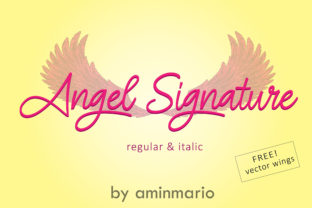
Angel Signature isn’t just another script font—it’s the kind of typeface that makes people pause mid-scroll, tilt their head, and whisper, “Where did that come from?” With its graceful swirls, balanced contrast, and subtle ink-trail warmth, Angel Signature is an equally authentic and elegant script font. It doesn’t shout. It lingers. And whether you're designing a wedding suite, launching a small-batch skincare line, or refreshing your personal brand, its romantic charm lands with quiet confidence.
What Makes Angel Signature Feel So Human?
Unlike many modern scripts built for speed or digital uniformity, Angel Signature was crafted to echo real handwriting—without sacrificing polish. Its lowercase “g” has a soft, looping tail; the uppercase “S” flows like silk; and letters connect with gentle, intentional joins—not rigid automation. There’s breathing room between characters, and a slight organic variation in stroke weight that mimics pressure from a fine nib pen. That’s why it never feels sterile or overproduced—even at small sizes on screen.
This authenticity matters most when emotion is part of the message. A font like Angel Signature doesn’t just say *what* you mean—it helps convey *how* you feel about it.
Weddings & Intimate Celebrations
Couples choosing stationery often describe wanting something “timeless but not stiff”—and that’s where Angel Signature excels. It’s been used on foil-stamped invitations paired with ivory cotton paper, hand-calligraphed place cards (digitally enhanced with Angel Signature as a base layer), and even embroidered linen napkins. One planner shared how a bride printed Angel Signature onto delicate vellum overlays—its light transparency and lyrical rhythm made the names feel whispered rather than announced.
Small-Business Branding for Heart-Led Brands
Think herbal apothecaries, ceramic studios, slow-fashion labels, or independent bookshops. These businesses thrive on trust, care, and craft—and Angel Signature reinforces that narrative instantly. A candle maker in Portland uses it for product labels alongside clean sans-serif body text: the contrast says “hand-poured, thoughtfully scented” before you even read the description. Similarly, a Brooklyn-based letterpress studio pairs Angel Signature headlines with Garamond subheads—creating hierarchy that feels both heirloom and approachable.
Digital Touchpoints with Emotional Warmth
It’s easy to assume script fonts don’t belong online—but Angel Signature proves otherwise. When used sparingly and intentionally, it adds soul to digital spaces: a hero-section tagline on a therapist’s website (“You’re welcome here”), a signature line beneath a founder’s newsletter sign-up, or animated lettering in a boutique’s Instagram Story announcement. Just avoid long paragraphs—stick to short phrases, names, or key emotional hooks.
Personal Projects with Quiet Confidence
Adults aged 20–50 are increasingly turning to typography as self-expression—not just for clients, but for themselves. A teacher designing custom classroom posters? Angel Signature gives student recognition certificates a heartfelt lift. Someone creating a memory journal for a newborn? Its tenderness mirrors the intimacy of those early days. Even digital planners and printable goal trackers use Angel Signature for headers—softening productivity with humanity.
Who Benefits Most—and How They Use It Differently
- Creative freelancers lean on Angel Signature to signal craftsmanship in proposals and portfolios—especially when working with lifestyle, wellness, or luxury clients who value nuance over noise.
- Non-designers appreciate its plug-and-play elegance: install once, apply to Canva or Adobe Express titles, and instantly elevate social posts without needing kerning expertise.
- Etsy sellers use it across product mockups, banner images, and thank-you cards—helping handmade goods feel more personal and less mass-produced.
- Event designers treat it like a design ingredient: layering it over textured backgrounds, reversing it into gold foil, or scaling it dramatically for signage that draws guests in—not just informs them.
Things to Consider Before You Choose Angel Signature
Its strengths are distinct—and so are its boundaries. Here’s what real users notice:
- Legibility at small sizes: While readable down to ~14pt in print, avoid using Angel Signature below 18pt for body copy on websites—or for accessibility-critical text like legal disclaimers or instructions.
- Pairing matters: It sings next to warm, humanist sans-serifs (like Poppins Light or Lora) or classic serifs (such as Playfair Display). Avoid clashing it with ultra-geometric or tech-forward fonts unless you’re aiming for deliberate contrast.
- Licensing clarity: Angel Signature is available through reputable foundries with clear desktop, web, and app licensing. Always verify usage rights—especially if embedding in client deliverables or SaaS platforms.
- Not for high-volume data: Don’t use it for tables, pricing grids, or multi-line forms. Its charm lives in moments—not monotony.
Why It Stands Out Among Script Fonts
There are dozens of elegant script fonts out there—but few balance authenticity and usability like Angel Signature does. Some feel too ornate for everyday use; others lean so casual they lack authority. Angel Signature sits comfortably in the middle: romantic but grounded, expressive but legible, distinctive but never distracting.
One designer described using it for a nonprofit’s annual report cover—replacing a generic script that felt “like a stock photo of joy.” With Angel Signature, the headline “Stories That Changed Lives” carried weight and warmth, inviting readers in instead of performing for them.
A Font That Grows With Your Intent
You don’t need a big budget or a design degree to let Angel Signature work for you. What it asks for is intention—not perfection. Whether you’re typing a heartfelt note to a friend, naming a new product line, or designing your first logo, Angel Signature responds to sincerity. It won’t fix weak messaging—but it will make strong messaging feel more deeply felt.
That’s the quiet power of a truly well-made script: it doesn’t draw attention to itself. It draws attention to you, and what you care about.